












How long can digital certificates be valid? Go to How long can digital certificates be valid?
Learn about how the validity periods for digital certificates are...
Sectigo code signing certificates allow software publishers to digitally sign their code, including applications, executables, scripts, and programs, to confirm that the software has not been altered after release.
Without a digital signature verified by a trusted Certificate Authority (CA), major operating systems like Microsoft Windows will show end users a warning message before installation. This reduces downloads and adoption and leaves unsigned or weakly signed code vulnerable to tampering and supply-chain attacks.
Sectigo Code Signing Certificates build user trust, protect against unauthorized modification, and support faster releases with streamlined issuance and reduced operational friction.
FIPS-Compliant Device Delivery
Highest level of Security
Bring Your Own Hardware
Code signing shouldn't block releases or scare away users. Sectigo's verified certificates boost install rates, eliminate signing delays, and protect every build from unauthorized tampering.
OS Security Warnings + Lost Installs
Slow Releases and DevOps Friction
Risk of Tampered Code and Supply Chain Attacks
Starting February 23, 2026, the CA/B Forum has changed the maximum certificate lifecycle for Code Signing certificates. Industry regulations require all Certificate Authorities to issue certificates no longer than 459 days (approximately 15 months). Certificate Authorities must ensure that the subscribers private key is generated stored and used in suitable FIPS-compliant hardware.
Requirements for private keys used with EV code signing certificates have been stronger than OV code signing certificates which are more relaxed.
The new rules are intended to reduce the potential misuse of code signing certificates and to further protect those certificates from getting into the wrong hands by making key protection requirements for OV code signing certificates the same as EV code signing certificates.
As of February 23, 2026, you will no longer be able to issue a single multi-year Code Signing certificate on a single FIPS-compliant device. Instead, if you purchase a multi-year Code Signing product from Sectigo you will receive a new compliant hardware device with a new certificate each year.
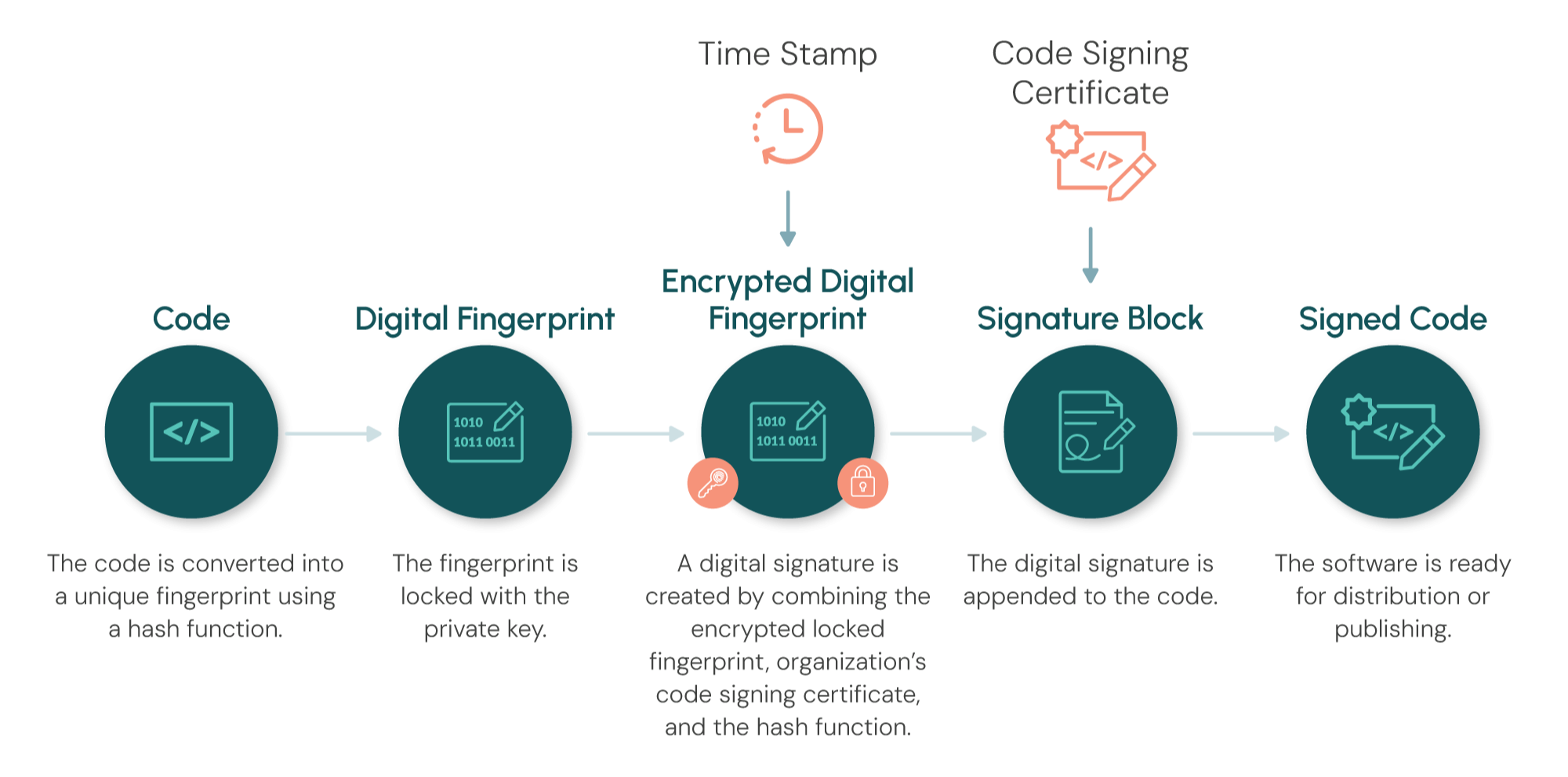
The code signing process works by using public key cryptography and cryptographic hashing to create a digital signature that binds a software package to a verified publisher identity. When code is signed, a unique fingerprint of the software is created, encrypted with the publisher’s private key, and attached to the code along with the code signing certificate so it can be verified before distribution.
When an end user downloads or installs the software, the operating system verifies the signature using the corresponding public key. If the signature is missing, invalid, or untrusted, the end user will receive an error or warning message.
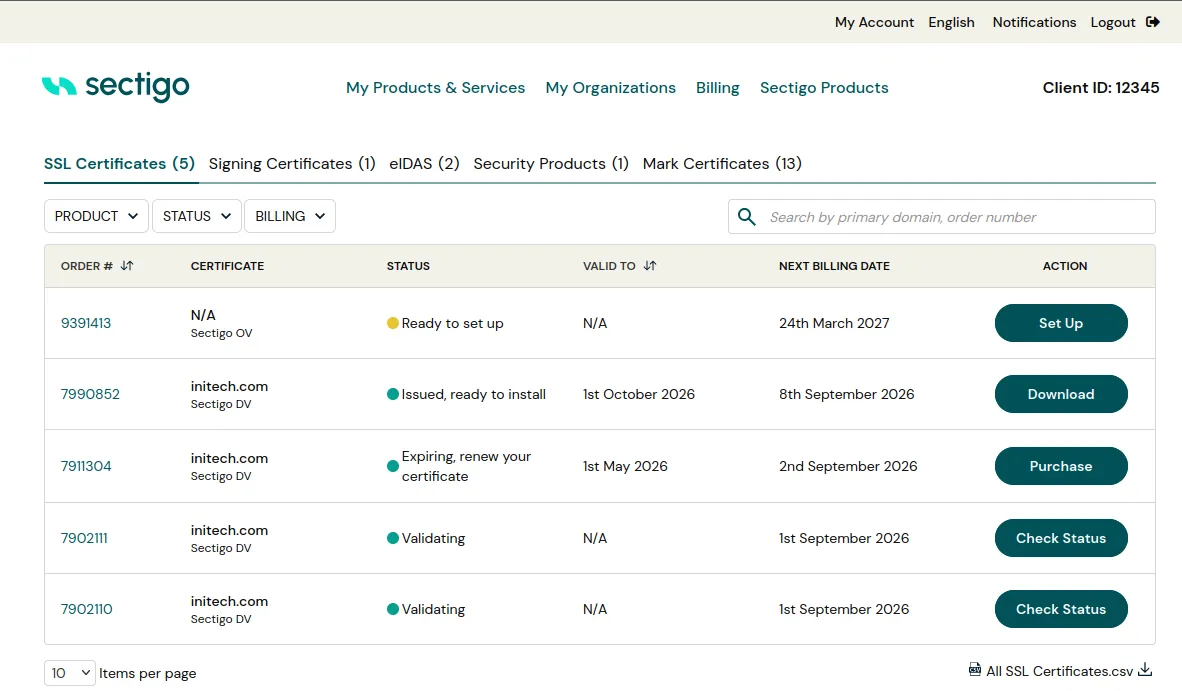
In our customer dashboard, you'll be able to view all products you have with Sectigo, view their lifecycle status, issue or reissue, and renew expiring certificates, saving you time and fear that an expired certificate may down your site at an unexpected time.
Securing some of the world’s largest and best-known brands.
Have another question?
Reach us by chat in the lower-right corner.
A code signing certificate is a type of digital certificate that allows software developers to add digital signatures to code and to include information about themselves and the integrity of their code within their software. The end users that download digitally signed 32-bit or 64-bit executable files (.exe, .ocx, .dll, .cab, and more) can be confident that the code came from the verified developer and was not tampered with by a third party.
Sectigo offers two types of code signing certificates, Organization Validation and Extended Validation, to match different security and distribution requirements.
OV code signing is best suited for internal applications and B2B software where faster issuance and baseline trust are sufficient. This option also offers a lower cost entry point.
EV code signing certificates provide the strongest identity verification and high end user confidence. This option is recommended when software is distributed to large audiences, for public-facing software, and in environments where security is critical.
A code signing service is an online cloud-based solution which provides signatures for code binaries. The developer’s certificate is maintained securely in the cloud. The developer or signee does not have to send the entire file to be signed, a hash code will suffice. The service provides security, convenience, and scalability.
There are certain requirements that need to be fulfilled during the code signing certificate validation process. The three main things that must be verified before issuance include:
1. The legal existence of the organization or individual named in the Organization field of the certificate must be verified.
2. The email to which the code signing certificate is to be sent must be [email protected], where domain.com is owned by the organization named in the certificate.
3. A callback must be made to a verified telephone number for the organization or individual named in the certificate in order to verify that the person placing the order is an authorized representative of the organization.
As of June 1, 2023 Code Signing certificates will be:
A Sectigo® code signing certificate starts at $536.25 per year when customers choose the five-year option. The cost goes up for shorter time periods and for EV code signing certificates.
Code Signing certificates are installed on a physical token and shipped to your location. We can only provide full refunds for products that have not been shipped. Once a product has shipped and within 30-days from order, we will refund the product cost, less shipping and token cost.
Yes. In addition to our standard token-based Code Signing Certificates, Sectigo can issue code signing certificates for use with your own supported hardware security module. This option is best suited for organizations with existing HSM infrastructure or automated signing workflows. Talk to an expert to see if this is the right fit for your environment.
We currently support Luna, YubiKey, Google Cloud KMS, Fortanix, YubiHSM 2, and nShield HSM infrastructures. Talk to an expert if you need help confirming compatibility for your environment.
Contact our team for help with your purchase or issuing your certificate.
Click the button below or click "Chat with an Expert" to start chatting with us now!
Learn about how the validity periods for digital certificates are...
A code signing certificate is a digital certificate issued by...
Code signing and the use of digital certificates underpin the...