
What is an X.509 certificate and how does it work?
An X.509 certificate is a digital certificate based on the widely accepted international X.509 standard. Learn why they’re important, how they work & more.

An X.509 certificate is a digital certificate based on the widely accepted International Telecommunications Union (ITU) X.509 standard, which defines the format of public key certificates used in public key infrastructure (PKI). They are used to manage identity and security in internet communications and computer networking. They are unobtrusive and ubiquitous, and we encounter them every day when using websites, mobile apps, online documents, and connected devices.
These certificates link a public key to a verified identity, enabling systems to confirm a digital entity’s legitimacy. They form the foundation of online security, protecting communications across websites, applications, documents, and devices.
Each X.509 certificate includes a public key, identifying details, and a digital signature from a trusted Certificate Authority (CA). The digital signature confirms the certificate’s integrity and origin, forming part of a certificate chain that leads back to a trusted root CA. This structure supports trust and helps prevent impersonation.
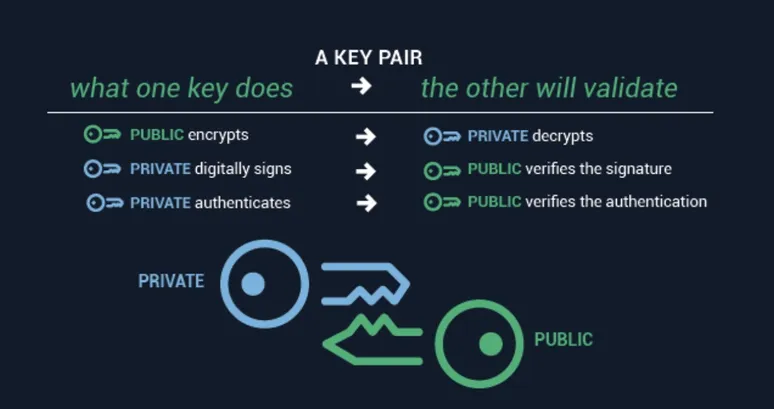
A core strength of an X.509 certificate is that it uses a key pair consisting of a related public key and a private key. In cryptography, the public and private key pair is used to establish secure session keys, verify identities, and enable encrypted communication.
The most common application of X.509-based PKI is Secure Sockets Layer (SSL) / Transport Layer Security (TLS), the foundation of the HTTPS protocol that enables secure web browsing. Beyond HTTPS, the X.509 standard is also used for code signing for application security, digital signatures, and other critical internet protocols.
X.509 version history
The first version of the X.509 standard was published in 1988. To formalize the rules for certificate issuance, the Telecommunication Standardization Sector of the ITU (ITU-T) developed a hierarchical system for distinguished names that followed the electronic directory service rules for X.500 and was inspired by the systems used to assign telephone numbers globally but applied to the more flexible organizational requirements of the Internet.
Version 3 introduced a major update with support for multiple extensions. Subsequent revisions have refined the v3 standard to support modern internet use cases and evolving security needs.
Additionally, the Internet Engineering Task Force (IETF), through its public-key infrastructure working group known as PKIX, adapted the X.509 v3 certificate standard to create the Internet X.509 Public Key Infrastructure Certificate and Certificate Revocation List (CRL), known as RFC 5280. This profile is now widely used to define how certificates and revocation lists are handled across internet systems.
The benefits of X.509 certificates
As X.509 certificates facilitate secure messaging and web browsing, there are significant benefits for organizations to use them. They are used to authenticate websites, encrypt data in transit, and validate users and devices in both public and private networks. Their structure, which includes a trusted digital signature from a Certificate Authority (CA), makes them integral to the functionality of secure communication protocols like SSL/TLS, and S/MIME.
By binding a verified identity to a public key, X.509 certificates establish digital trust that supports security and data privacy in every interaction. These benefits extend across web traffic, internal systems, APIs, email communications, and beyond.
Establish trust
Digital certificates, also known as public key certificates, allow individuals, organizations, and even devices to prove their identity in a digital context. As the foundation for all digital identities, X.509 certificates are everywhere and are essential to every connected process from websites to applications to endpoint devices and online documents. For example, without these, we wouldn't be able to trust that www.amazon.com is actually Amazon's website.
This level of trust is built not only through cryptographic architecture, but also through the certificate issuance process. The X.509 format supports identity validation by confirming that:
- The public key belongs to the domain, organization, or individual contained within the certificate
- The certificate has been signed by a trusted Certificate Authority (CA), such as Sectigo, or self-signed
- The certificate follows defined certificate policies and has not been revoked or altered
When a certificate is signed by a trusted CA, the certificate user can be confident that the certificate owner or hostname/domain has been validated, while self-signed certificates can be trusted to a lesser extent as the owner doesn't go through any additional validation before issuance.
Enable scalability
The public key infrastructure (PKI) architecture behind X.509 certificates supports massive scalability. Organizations can protect billions of daily data exchanges using certificates that require no manual intervention to verify or decrypt. This is possible because public keys can be distributed openly, without revealing the private key needed to unlock the encrypted data.
This makes X.509 certificates uniquely effective at scaling secure identity and encryption across cloud services, enterprise networks, connected devices, and cross-border systems.
Help achieve crypto agility
The X.509 standard supports multiple cryptographic algorithms, including RSA, ECC, and DSA, and is being extended to support emerging post-quantum algorithms. This flexibility allows organizations to adopt stronger cryptography over time without rebuilding their entire PKI infrastructure. As algorithms evolve and threats increase, this crypto agility ensures that systems remain protected with up-to-date, standards-based encryption.
Promote interoperability
The X.509 standard is universally supported across browsers, operating systems, mobile platforms, network devices, and cloud providers. This broad compatibility allows certificates to function consistently across different environments and vendors.
Support automation and lifecycle management
Digital certificate lifecycles can be managed automatically using protocols like ACME, EST, and SCEP. Organizations can issue, renew, and revoke X.509 certificates at scale without manual involvement. This automation reduces the risk of expired certificates, outages, or human error, and helps maintain uptime across critical systems.
How do X.509 certificates work?
X.509 certificates operate by binding a public key to a verified identity using a digital signature from a trusted Certificate Authority (CA). The certificate follows a defined structure that enables secure data encryption, authentication, and trust validation across systems.
The X.509 standard is based on an interface description language known as Abstract Syntax Notation One (ASN.1), which defines data structures that can be serialized and deserialized in a cross-platform way. Using the key pair associated with the certificate, systems can establish secure sessions, verify digital signatures, and protect communications.
The basis of public key infrastructure
The public key consists of a string of random numbers and can be used to encrypt a message. Only the intended recipient can decipher and read this encrypted message and it can only be deciphered and read by using the associated private key, which is also made of a long string of random numbers. The private key remains secret and is never shared.
As the public key is published for all the world to see, public keys are created using a complex cryptographic algorithm to pair them with an associated private key by generating random numeric combinations of varying lengths so that they cannot be exploited through a brute force attack.
The most common algorithms used to generate public keys are:
- Rivest–Shamir–Adleman (RSA): A widely used algorithm that relies on the difficulty of factoring large prime numbers.
- Elliptic curve cryptography (ECC): Uses elliptic curves over finite fields to provide strong security with shorter key lengths.
- Digital signature algorithm (DSA): Based on modular exponentiation and the discrete logarithm problem.
The key size or bit length of public keys determines the strength of protection. For example, 2048-bit RSA keys are widely used in SSL certificates, digital signatures, and other digital certificates. This key length offers sufficient cryptographic security to keep hackers from cracking the algorithm. Standards groups like the CA/Browser Forum define minimum key sizes and cryptographic requirements to maintain trust and compatibility across browsers and systems.
Figure: X.509 certificates use a related public and private key pair for identity authentication and security for internet communications and computer networking
Issuance fields
X.509 certificate fields contain information about the identity that the certificate is issued to as well as the identity of the issuer CA. The standard fields include:
- Version: The X.509 version used, which determines the structure and available extensions.
- Serial number: The unique serial number identifier provided by the CA that distinguishes the certificate from others.
- Signature algorithm: The specific hashing and encryption method used to generate the digital signature.
- Signature value: The digital signature itself, created by the CA’s private key to authenticate the certificate contents.
- Issuer distinguished name: The name of the CA issuing the certificate
- Validity period of the certificate: The start/end date and time it's valid and can be trusted
- Subject distinguished name: The name of the identity the certificate is issued to
- Subject public key information: – the public key associated with the identity
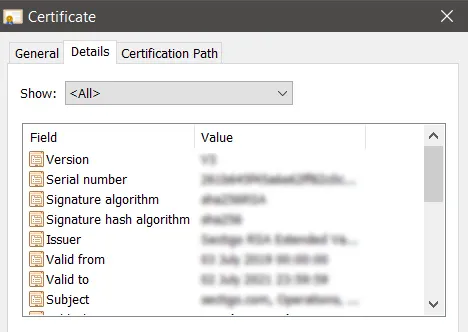
Figure: X.509 certificates use a related public and private key pair for identity authentication and security for internet communications and computer networkingCommon digital certificate extensions
In addition to its standard information fields, X.509 version 3 introduced extensions that expand certificate functionality for modern internet use. Two common X.509 certificate extensions in use today include:
- Subject Alternative Name extension (SAN): Allows a certificate to bind multiple identities to the same public key. This can include additional domains, DNS names, IP addresses, or email addresses. Because of this extension, a single certificate can cover multiple endpoints, reducing complexity and cost. SAN-enabled certificates are often referred to as multi-domain certificates.
- Key Usage: Defines how the public key may be used, such as for digital signatures, key encipherment, or certificate signing. For example, a certificate with “signing-only” usage cannot be used for encryption. This prevents misuse and ensures that certificates are applied as intended.
Other commonly used extensions include Extended Key Usage, Basic Constraints, and CRL Distribution Points, depending on the certificate’s role and environment.
Digital certificates apply hierarchical trust chains
To further establish the trust of an identity, multiple digital certificates are often combined to build a hierarchical chain of trust that provides a series of verification layers. Each must be signed by an issuer CA as part of the X.509 verification process. The CA is named and stored in the root of the certificate. Additional intermediate certificates can be included in the trust chain and must be validated.
The full certificate chain typically includes:
Root certificate
Intermediate certificate
Leaf certificate
For example, when a web browser client reads the certificate, it must be able to follow the hierarchical path of certification including any intermediates required for validation that are recursively linked back to the root CA listed in the client's trust store, resulting in a complete chain of trust.
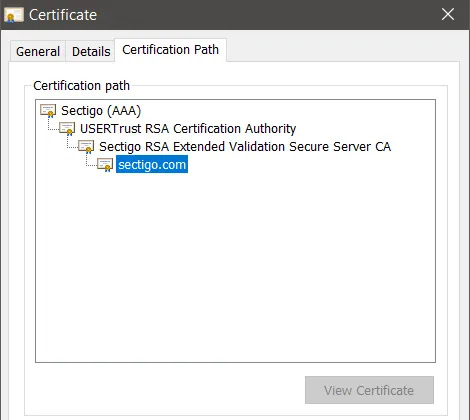
Figure: SSL/TLS certificates often combine intermediate CA certificates to create a hierarchical trust chainCertificate Revocation Lists (CRLs)
The X.509 standard also defines the use of a certificate revocation list, which identifies all of the digital certificates that have been revoked by the issuing CA prior to the scheduled expiration date. Revocation typically occurs when a private key is compromised, the certificate was issued improperly, or the certificate holder's status changes.
These revoked certificates should no longer be trusted.
CRLs offer a simple way to distribute information about these invalid certificates. However, CRLs are increasingly deprecated by modern web browsers and applications in favor of more efficient methods like the Online Certificate Status Protocol (OCSP) and OCSP stapling, which offer complete revocation features.
PKI certificate encoding
One notable element not defined in the X.509 standard is how the certificate contents should be encoded to be stored in files.
There are two encoding schemas commonly used to store digital certificates in files:
- Distinguished Encoding Rules (DER) is most common, as the schema addresses most data objects. Certificates encoded by DER are binary files and cannot be read by text editors but can be processed by web browsers and many client applications.
- Privacy Enhanced Mail (PEM) is an encrypted email encoding schema that can be used to convert DER-encoded certificates into text files.
Common applications of X.509 public key infrastructure
Many internet protocols rely on X.509, and there are many applications of the PKI technology that are used every day, including web server security, digital signatures and document signing, and digital identities.
Web server security with SSL/TLS certificates
PKI is the basis for the SSL/TLS protocols that support HTTPS connections in modern web browsers. Without SSL certificates or TLS to establish secure connections, cybercriminals could exploit the Internet or other IP networks using a variety of attack vectors, such as man-in-the-middle attacks, to intercept messages and access their contents.
Digital signatures and document signing
In addition to being used to secure messages, PKI-based certificates enable tamper-proof digital signatures and verified document signing.
Digital signatures are a specific type of electronic signature that leverages PKI to authenticate the identity of the signer and the integrity of the signature and the document. Digital signatures cannot be altered or duplicated in any way, as the signature is created by generating a hash, which is encrypted using a sender's private key. This cryptographic verification mathematically binds the signature to the original message to ensure that the sender is authenticated and the message itself has not been altered.
Code signing
Code Signing enables developers to add a layer of assurance by digitally signing applications, drivers, and software programs so that end users can verify that a third party has not altered or compromised the code they receive. To verify the code is safe and trusted, these digital certificates include the software developer's signature, the company name, and timestamping.
Email certificates
S/MIME certificates are used to validate email senders and encrypt the content of messages and attachments. This prevents attackers from spoofing identities or reading messages in transit.
S/MIME leverages X.509 certificates to secure both personal and organizational email communications, protecting against spear phishing, data loss, and sophisticated social engineering attacks.
Many industries rely on S/MIME to meet regulatory or compliance requirements.
Digital identities
X.509 certificates also provide effective digital identity authentication. As data and applications expand beyond traditional networks to mobile devices, public clouds, private clouds, and Internet of Things devices, securing identities becomes more important than ever. And digital identities don't have to be restricted to devices; they can also be used to authenticate people, data, or applications. Digital identity certificates based on this standard enable organizations to improve security by replacing passwords, which attackers have become increasingly adept at stealing.
How do I get an X.509 certificate?
A critical component of deploying X.509 certificates is a trusted certificate authority or agent to issue certificates and publish the public keys associated with individuals' private keys. Without this trusted CA, it would be impossible for senders to know they are in fact using the correct public key associated with the recipient's private key and not the key associated with a malicious actor intending to intercept sensitive information and use it for nefarious purposes.
You have a few options when obtaining X.509 certificates:
- Use a trusted third-party Certificate Authority (CA): Providers like Sectigo validate the identity of the requester and issue certificates backed by a public trust hierarchy.
- Run your own internal CA: Many enterprises and tech providers choose to operate their own CA to issue certificates for internal systems, devices, or users.
- Use self-signed certificates: These are created and signed by the organization itself. While easy to generate, they are not publicly trusted and require manual trust configuration.
Regardless of which method you choose, the Certificate Authority must:
- Validate the identity of the requester before issuing the certificate.
- Confirm that the published public key is correctly associated with the requester’s private key.
- Maintain strong internal security practices to protect against compromise or abuse.
Manage X.509 certificates with Sectigo
One of the most critical aspects of X.509 certificates is effectively managing them at scale using automation. Without great people, processes, and technology in place, companies are leaving themselves open to cybersecurity breaches, outages, damage to their brand, and critical infrastructure failures.
Sectigo Certificate Manager (SCM) Pro provides centralized control over the full lifecycle of public and private certificates. From issuance to renewal and revocation, SCM Pro supports automation, policy enforcement, and seamless integration into your existing tech stack.
SCM Enterprise extends this capability to every human and machine identity across your organization, delivering complete certificate lifecycle management from a single platform.